Almost half of women in Europe name dark under-eye circles as one of their primary skin concerns. Most have been told the same thing: sleep more, drink more water, use eye cream. They do all of this. The circles are still there. That persistent gap between the advice and the outcome is not a mystery — it is a clue.
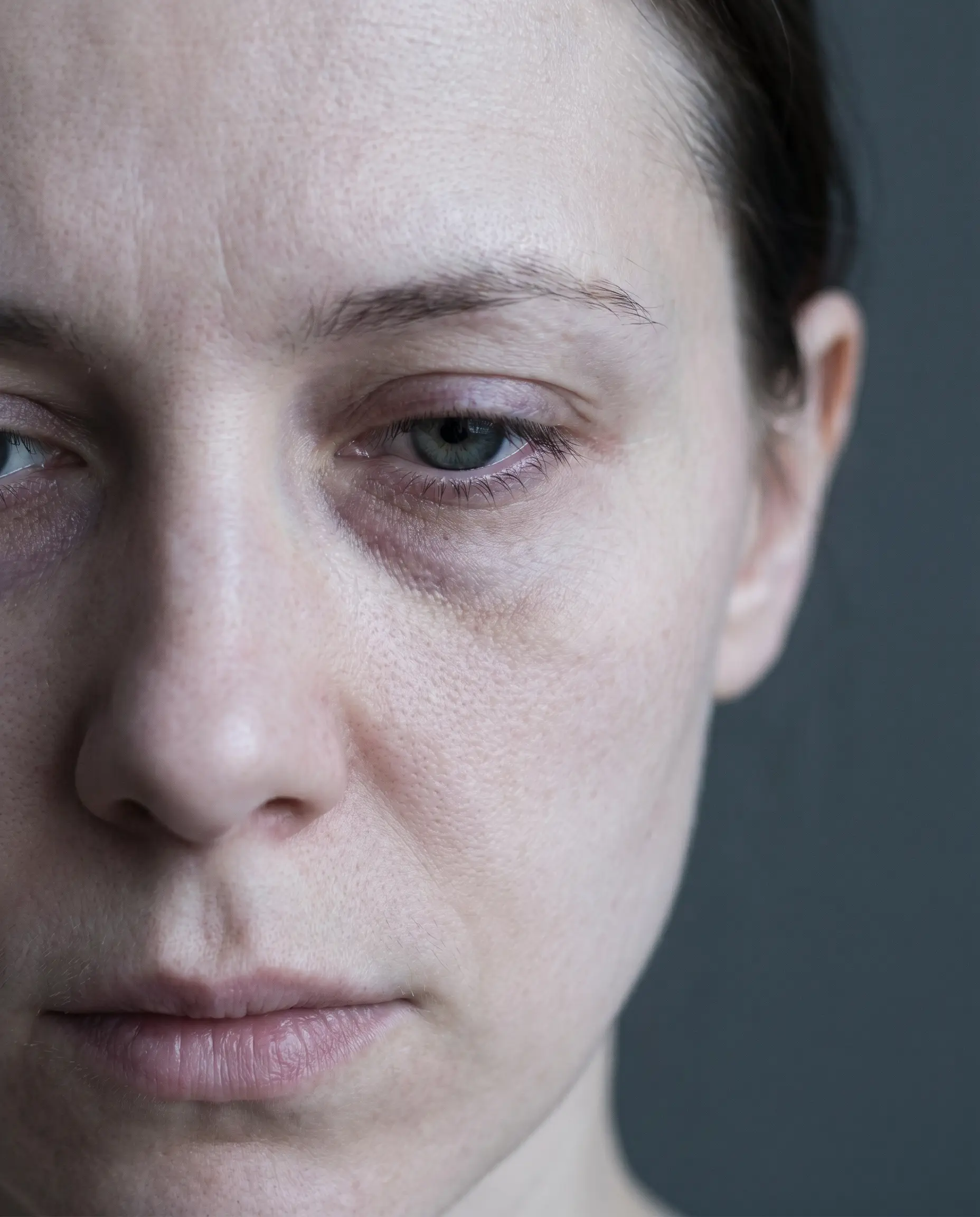
What dark circles actually are
Dark circles are not one thing. They have three distinct causes, often operating at the same time, and they look similar enough that most people treat them as a single problem.
The first is vascular: blood vessels sitting close under extremely thin skin. The under-eye area has the thinnest dermis on the face, roughly a quarter the thickness of the cheek, and almost no sebaceous gland activity to provide structural support. When the skin loses collagen density over time, or when fatigue reduces local blood oxygenation, those vessels become more visible. The dark discolouration is the colour of blood seen through skin that is not quite opaque enough to hide it.
The second is pigmentation: melanin deposits that accumulate from repeated inflammation, sun exposure, or the friction of rubbing. This type does not shift much with sleep at all, which partly explains the frustration.
The third is structural: the shadow cast by a hollowing of the tear trough as the periorbital fat pad reduces with age and collagen thins. This is the type that cannot be creamed away because it is a three-dimensional change, not a surface one.
Sleep affects the first type most directly, the third type gradually over years, and the second type barely at all. If you have primarily pigment-based circles, more sleep was never going to fix them. But even for the vascular type, the most common kind, the relationship with sleep is more specific than most people understand.
Why sleep quantity misses the point
Eight hours of sleep does not automatically mean eight hours of skin repair. What matters is whether the repair process runs properly during those hours and that depends on a signal that fires before you get into bed, not during sleep itself.
The skin's overnight repair window is opened by melatonin. When melatonin rises in the evening, it initiates a cascade of repair activity collagen synthesis in fibroblasts, barrier lipid secretion, cell division, antioxidant enzyme activation. Without a clean melatonin signal, those processes either start late or run at reduced intensity. The hours are there. The repair is not.
Evening light exposure from phones, laptops, and LED lighting suppresses melatonin through the melanopsin pathway in the eye. The research is clear: even moderate screen use in the two hours before sleep pushes melatonin onset back by an average of one to three hours.1 A person getting eight hours of sleep with a delayed melatonin signal is effectively getting five or six hours of repair-quality time, because the window did not open until the night was already advanced.
For the periorbital area specifically, this compression matters more than almost anywhere else on the face. The tissue around the eyes has the least structural reserve. When repair runs short, this is where it shows first.
What the overnight window is supposed to do for the eye area
Two things in particular happen overnight that directly affect how the under-eye area looks in the morning. The first is lymphatic drainage. During sleep, lymphatic activity continues to clear the fluid accumulation that builds up in the face during the day. This process follows a circadian pattern it is regulated by the same internal clock that governs the rest of overnight repair. When the clock is disrupted, the drainage is less efficient, and the fluid that should have cleared overnight remains visible as puffiness through thin periorbital skin.
The second is collagen support. The dermis under the eyes depends entirely on ongoing collagen synthesis to maintain its thickness and opacity. Fibroblasts run their collagen synthesis during the overnight window, directed by the same melatonin signal. When the window is compressed over weeks and months, periorbital collagen thins faster than it can be replenished. The vessels become more visible. The hollowing begins earlier than it should.
This is why consistent evening light habits make a visible difference to dark circles over time, in a way that eye cream alone does not. The product addresses the surface. The light environment addresses the mechanism producing the problem.
What you can actually do
Pigment-based circles need targeted treatment specialist intervention in most cases. But vascular and structural dark circles respond to anything that improves the overnight repair environment: dimming indoor lights in the two hours before sleep, reducing screen exposure in the evening, keeping sleep timing consistent across the week so the circadian system has a stable anchor, and allowing the repair window to open on schedule.
It is slower than a product promise. It is also the only intervention that addresses what is actually causing the problem, rather than temporarily masking it. The overnight timeline article in this journal covers exactly what the skin should be doing during those repair hours — and what prevents it.
- Dark circles have three causes: vascular, pigmentation, and structural. And sleep primarily addresses only the first. Products that promise to fix all three are addressing different problems with the same tool.
- Eight hours of sleep does not equal eight hours of repair. The repair window is opened by melatonin. Evening light delays melatonin onset, compressing the window regardless of total sleep duration.
- The periorbital area has the thinnest skin on the face, almost no sebaceous support, and the least structural reserve. It shows the deficit from disrupted overnight repair before anywhere else.
- Consistent evening light management: dimming lights and reducing screens in the two hours before sleep is the upstream intervention. It addresses the mechanism rather than the symptom.
- Brainard GC, Hanifin JP, Greeson JM, et al. Action spectrum for melatonin regulation in humans: evidence for a novel circadian photoreceptor. J Neurosci. 2001;21(16):6405–6412.
- Kleszczynski K, Fischer TW. Melatonin and human skin aging. Dermatoendocrinol. 2012;4(3):245–252.